
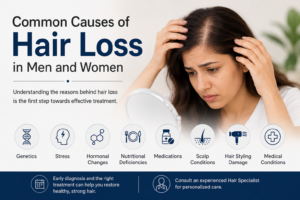
Hair loss is one of the most common concerns affecting both men and women. While losing a small amount of hair every day is normal, excessive hair fall, thinning hair, or bald patches may indicate an underlying condition that needs medical attention. Hair loss can occur due to several factors, including genetics, hormonal changes, stress, nutritional deficiencies, and certain medical conditions.
The good news is that many forms of hair loss can be managed effectively when diagnosed early. Modern hair treatment in Nashik focuses on identifying the root cause and creating a personalised treatment plan that supports healthier hair growth.
In this blog, we’ll discuss the most common causes of hair loss, when to seek professional help, and the treatment options available.
Understanding the Hair Growth Cycle
Hair naturally grows in three phases:
Anagen (Growth Phase)
This is the active growth stage and usually lasts between two and seven years.
Catagen (Transition Phase)
Hair growth slows, and the follicle prepares for the resting phase.
Telogen (Resting Phase)
Older hair sheds naturally to make room for new hair growth.
When this cycle is disturbed, noticeable hair thinning or excessive hair fall may occur.
Common Causes of Hair Loss
1. Genetic Hair Loss
Hereditary hair loss is the most common cause.
In men, it often appears as a receding hairline and thinning at the crown.
Women generally experience diffuse thinning over the top of the scalp while maintaining the frontal hairline.
2. Hormonal Changes
Hormonal imbalance can significantly affect hair growth.
Common causes include:
- Pregnancy
- Childbirth
- Menopause
- Thyroid disorders
- PCOS
Treating the underlying hormonal condition often improves hair health.
3. Stress
Physical illness, surgery, emotional stress, or sudden weight loss may trigger temporary hair shedding known as Telogen Effluvium.
Hair usually begins improving once the body recovers.
4. Nutritional Deficiencies
Hair requires adequate nutrition for healthy growth.
Low levels of:
- Iron
- Vitamin D
- Vitamin B12
- Zinc
- Protein
may contribute to excessive hair fall.
5. Medical Conditions
Hair loss may also be associated with:
- Thyroid disease
- Autoimmune disorders
- Diabetes
- Chronic illnesses
- Scalp infections
6. Medications
Certain medicines may cause temporary hair loss, including treatments for:
- Blood pressure
- Depression
- Arthritis
- Cancer
Always consult your doctor before making changes to prescribed medication.
7. Scalp Problems
Healthy hair begins with a healthy scalp.
Conditions like dandruff, psoriasis, fungal infections, and seborrheic dermatitis can weaken hair follicles if left untreated.
8. Hair Styling Damage
Frequent chemical treatments, excessive heat styling, and tight hairstyles may damage hair over time.
Reducing excessive styling can help protect hair health.
When Should You Visit a Hair Specialist?
Consult a Hair Specialist in Nashik if you notice:
- Hair fall lasting more than three months
- Sudden hair loss
- Bald patches
- Receding hairline
- Continuous hair thinning
- Persistent scalp problems
Early diagnosis often leads to better treatment outcomes.
Hair Loss Diagnosis
A detailed consultation may include:
- Medical history
- Scalp examination
- Hair density assessment
- Blood investigations (when necessary)
- Lifestyle evaluation
Understanding the exact cause helps create a personalized treatment plan.
Treatment Options
Depending on your condition, treatment may include:
- PRP Therapy
- Medical Treatment
- Hair Transplant
- Nutritional Support
- Scalp Care
- Lifestyle Modifications
Every patient receives a treatment plan based on their individual needs.
Tips for Maintaining Healthy Hair
- Eat a balanced diet.
- Avoid excessive heat styling.
- Manage stress effectively.
- Treat scalp conditions early.
- Follow your doctor’s advice.
- Schedule regular follow-ups when needed.
Conclusion
Hair loss is not always permanent, and early diagnosis can make a significant difference. Whether the cause is genetic, hormonal, nutritional, or medical, modern treatment options can help manage hair loss and support healthier hair growth.
If you are experiencing persistent hair fall or thinning, consult an experienced Hair Specialist in Nashik for a comprehensive evaluation. Personalized Hair Treatment in Nashik can help identify the underlying cause and guide you toward the most appropriate solution.
Frequently Asked Questions (FAQs)
Is hair loss normal?
Yes. Losing around 50–100 hairs per day is considered normal.
Can stress cause hair loss?
Yes. Physical and emotional stress can temporarily increase hair shedding.
Who is a good candidate for PRP treatment?
Individuals with early hair thinning and active hair follicles may benefit from PRP therapy after medical evaluation.
When should I consult a hair specialist?
If you notice persistent hair fall, thinning, or bald patches, it is advisable to seek professional evaluation.
Can hair loss be treated without surgery?
Yes. Many individuals respond well to non-surgical treatments such as medications, PRP therapy, and lifestyle modifications.