
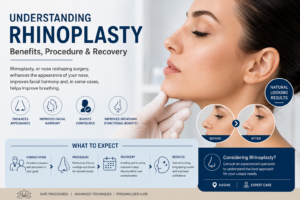
The nose plays a central role in facial appearance and also contributes significantly to breathing function. Some people are unhappy with the shape or size of their nose, while others experience breathing difficulties due to structural problems or previous injuries. Rhinoplasty is a surgical procedure that can improve the appearance of the nose, enhance facial harmony, and, in appropriate cases, help improve nasal function.
Modern Rhinoplasty in Nashik combines advanced surgical techniques with personalized treatment planning to achieve natural-looking results that complement the patient’s facial features. Whether the goal is cosmetic enhancement or functional correction, the procedure is carefully tailored to each individual’s needs.
This blog explains what rhinoplasty is, who may benefit from it, how the procedure is performed, and what patients can expect during recovery.
What Is Rhinoplasty?
Rhinoplasty, commonly known as a nose reshaping procedure, is a surgery performed to change the size, shape, or structure of the nose. It may be performed for cosmetic reasons, functional improvement, or a combination of both.
Many people choose Cosmetic Nose Surgery to improve facial balance, while others undergo surgery to correct breathing problems caused by a deviated nasal septum, congenital conditions, or trauma.
Each rhinoplasty procedure is customized according to the patient’s facial anatomy, skin thickness, and desired outcome.
Why Do People Consider Rhinoplasty?
There are several reasons why someone may consider Nose Surgery in Nashik.
Common concerns include:
- A prominent nasal hump
- A wide or large nose
- Drooping nasal tip
- Bulbous nose tip
- Crooked nose
- Asymmetry
- Breathing difficulties
- Nasal injury or fracture
- Congenital nose deformities
A consultation with an experienced plastic surgeon helps determine whether rhinoplasty is the most appropriate treatment.
Benefits of Rhinoplasty
Rhinoplasty offers both cosmetic and functional advantages depending on the patient’s needs.
Some potential benefits include:
- Improves facial harmony and proportions
- Enhances the shape of the nose
- Refines the nasal tip
- Corrects a dorsal hump
- Improves nasal symmetry
- May improve breathing in selected patients
- Restores appearance after injury
- Provides long-lasting results
The goal is always to achieve natural-looking improvements that complement the rest of the face rather than creating an artificial appearance.
Who Is a Good Candidate?
Rhinoplasty may be suitable for individuals who:
Are unhappy with the appearance of their nose
- Have fully developed facial bones
- Experience breathing problems related to nasal structure
- Have realistic expectations about the results
- Are in good general health
- Do not smoke or are willing to stop smoking before surgery
- A detailed consultation helps determine whether surgery is appropriate based on individual goals and medical history.
Types of Rhinoplasty
Depending on the patient’s concerns, rhinoplasty may be performed for different purposes.
Cosmetic Rhinoplasty
This procedure focuses on improving the appearance of the nose by reshaping or resizing specific structures.
Functional Rhinoplasty
Performed to improve airflow and breathing by correcting structural abnormalities inside the nose.
Revision Rhinoplasty
Some patients require secondary surgery to improve the results of a previous rhinoplasty.
How Is Rhinoplasty Performed?
The exact surgical technique depends on the patient’s anatomy and treatment goals.
The procedure generally involves:
Consultation and Planning
The surgeon evaluates facial proportions, nasal structure, skin thickness, and breathing function before developing a personalized treatment plan.
Anesthesia
Rhinoplasty is usually performed under general anesthesia or, in selected cases, local anesthesia with sedation.
Surgical Approach
The surgeon may use either an open or closed technique depending on the complexity of the procedure.
Reshaping the Nose
Bone, cartilage, and soft tissues are carefully modified to achieve the desired shape while preserving or improving nasal function whenever possible.
Completion
The incisions are closed, and a protective splint is placed over the nose to support healing.
The surgery generally takes between one and three hours, depending on the complexity of the procedure.
Recovery After Rhinoplasty
Recovery varies from person to person, but most patients experience gradual improvement over several weeks.
Common recovery stages include:
First Week
- Mild swelling and bruising around the eyes
- Nasal splint remains in place
- Mild discomfort controlled with medication
Two to Four Weeks
- Bruising begins to resolve
- Most daily activities can usually be resumed
- Swelling gradually decreases
Long-Term Healing
Although much of the swelling improves within a few weeks, subtle refinement continues over several months. Final results may take up to one year to become fully visible.
Following post-operative instructions carefully is essential for optimal healing.
Tips for a Smooth Recovery
Patients are commonly advised to:
- Sleep with the head elevated
- Avoid heavy lifting and strenuous exercise
- Protect the nose from accidental injury
- Avoid wearing heavy glasses if advised
- Attend scheduled follow-up appointments
- Take medications exactly as prescribed
These measures help support proper healing and reduce the risk of complications.
Are Rhinoplasty Results Permanent?
In most cases, the structural changes made during rhinoplasty are long-lasting. Once healing is complete, the results generally remain stable for many years. However, natural aging and facial changes may continue over time.
Maintaining realistic expectations and following your surgeon’s recommendations contribute to long-term satisfaction.
Choosing the Right Surgeon
Rhinoplasty is one of the most technically demanding cosmetic procedures because it requires balancing aesthetics with nasal function. Selecting a qualified plastic and cosmetic surgeon with experience in facial procedures is essential.
During your consultation, your surgeon will discuss your concerns, evaluate your facial anatomy, explain available treatment options, and create a personalized surgical plan based on your goals.
Conclusion
Rhinoplasty is a highly individualized procedure that can improve facial balance while also addressing functional concerns in appropriate cases. Whether the goal is cosmetic refinement, correction after injury, or improved breathing, careful planning and expert surgical techniques play an important role in achieving natural-looking results.
If you are considering Rhinoplasty in Nashik, consult an experienced plastic surgeon for a detailed evaluation. A personalized consultation helps determine whether Nose Surgery in Nashik or another treatment option is best suited to your needs. With the right approach, Cosmetic Nose Surgery can enhance facial harmony while maintaining a natural appearance.
Frequently Asked Questions (FAQs)
Is rhinoplasty only a cosmetic procedure?
No. Rhinoplasty may also be performed to improve breathing and correct structural nasal problems.
How long does recovery take?
Most patients return to routine activities within two weeks, while complete healing and final results may take several months.
Will there be visible scars?
Closed rhinoplasty leaves no external scars. Open rhinoplasty involves a small incision that typically heals into a fine, less noticeable scar.
Is rhinoplasty painful?
Most patients experience mild discomfort rather than significant pain, which is usually managed with prescribed medication.
Are the results permanent?
Yes. Rhinoplasty generally provides long-lasting results, although natural aging continues over time.