
Introduction
Hair thinning is a common concern among women and can occur at different stages of life. Seeing more hair on a pillow, comb, or during washing may initially seem normal, but persistent thinning or increased hair shedding can sometimes indicate an underlying issue.
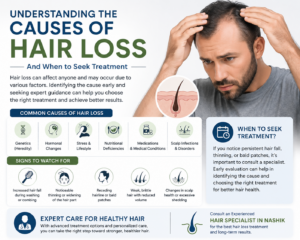
Women can experience hair loss for many reasons, including hormonal changes, nutritional deficiencies, stress, genetics, medical conditions, and certain medications. Because the cause is different for every person, treatment should begin with understanding why the hair is thinning rather than choosing a treatment based only on the visible symptoms.
Modern Hair Treatment in Nashik focuses on identifying the underlying cause and developing an individualized approach to support scalp and hair health.
What Is Hair Thinning in Women?
Hair thinning occurs when the hair becomes less dense or individual strands become finer than before. Unlike sudden hair loss, thinning may develop gradually and can sometimes be difficult to notice in the early stages.
Some women may notice a wider hair parting, reduced volume around the crown, a thinner ponytail, or increased shedding while brushing or washing.
Hair thinning can be temporary in some cases, while certain types may continue without appropriate management.
Common Causes of Hair Thinning in Women
1. Hormonal Changes
Hormones play an important role in the hair growth cycle. Changes during pregnancy, after childbirth, menopause, or conditions such as thyroid disorders and PCOS may contribute to increased hair shedding or thinning.
Post-pregnancy hair shedding, for example, can occur because hormonal levels change after delivery. In many women, hair growth gradually returns to its previous pattern, although persistent thinning should be evaluated.
2. Genetic Hair Loss
Genetic or hereditary hair loss can affect women as well as men. Women may experience gradual thinning, particularly around the crown or central parting of the scalp.
Because genetic hair loss can progress slowly, early evaluation by a Hair Specialist in Nashik can help determine whether treatment may be beneficial.
3. Nutritional Deficiencies
Hair follicles require adequate nutrients to maintain normal growth. Low levels of iron, vitamin D, vitamin B12, zinc, or insufficient protein intake may contribute to hair shedding in some individuals.
If a nutritional deficiency is suspected, appropriate blood tests may be recommended before starting supplements.
4. Stress and Lifestyle Factors
Physical or emotional stress can temporarily disturb the normal hair growth cycle. Significant weight loss, illness, lack of sleep, restrictive diets, or major lifestyle changes may also contribute to increased shedding.
This type of hair loss may improve once the underlying trigger is addressed, although recovery can take time.
5. Scalp Conditions
A healthy scalp provides an important foundation for healthy hair growth. Conditions such as dandruff, seborrheic dermatitis, psoriasis, fungal infections, or persistent scalp inflammation can contribute to hair shedding or breakage.
Treating the scalp condition is often an important part of an overall Hair Loss Treatment in Nashik plan.
6. Excessive Hair Styling
Frequent straightening, colouring, bleaching, heat styling, and tight hairstyles can weaken the hair shaft. This may cause breakage that can look similar to hair thinning.
Reducing excessive chemical and heat exposure can help protect existing hair.
When Should Women Consult a Hair Specialist?
Occasional hair shedding is normal, but professional evaluation may be useful when hair loss becomes persistent or noticeably different from your usual pattern.
Consider consulting a Hair Specialist in Nashik if you notice:
- Continuous hair shedding
- A widening hair part
- Reduced hair density
- A noticeably thinner ponytail
- Receding hair around the temples
- Sudden or patchy hair loss
- Scalp itching, redness, or scaling
- Hair loss following a medical condition or significant lifestyle change
Early assessment can help identify the cause and determine whether treatment is required.
How Is Hair Thinning Diagnosed?
Treatment should begin with an understanding of the underlying problem. During a consultation, a specialist may evaluate your hair loss pattern, scalp condition, medical history, diet, lifestyle, and family history.
Depending on your symptoms, blood investigations may also be recommended to check for nutritional deficiencies or hormonal and thyroid-related problems.
This information helps create a treatment plan suited to your individual needs rather than applying the same approach to every patient.
Treatment Options for Hair Thinning
The appropriate treatment depends on the cause, severity, and overall health of the hair and scalp.
Medical Treatment
Certain types of hair loss may respond to prescribed medications or topical treatments. These should only be used after appropriate medical evaluation.
PRP Therapy
Platelet-rich plasma, commonly known as PRP, uses components obtained from the patient’s own blood. It may be considered for certain types of hair thinning as part of a personalized treatment plan.
Hair Restoration Procedures
Women with specific patterns of permanent hair loss may be evaluated for hair restoration procedures. Suitability depends on factors such as donor hair availability, hair density, and the underlying cause of hair loss.
Nutritional Support
If tests identify a nutritional deficiency, correcting that deficiency may form part of the treatment plan. Supplements should be taken based on professional advice rather than without assessment.
Scalp Treatment
When scalp conditions contribute to hair loss, treating the underlying scalp problem can help create a healthier environment for hair growth.
Can Hair Thinning Be Prevented?
Not every type of hair loss can be prevented, particularly when genetics or certain medical conditions are involved. However, some everyday habits can help maintain hair and scalp health.
Try to:
- Follow a balanced diet with adequate protein.
- Avoid very tight hairstyles.
- Limit excessive heat styling.
- Avoid unnecessary chemical treatments.
- Manage stress and maintain adequate sleep.
- Treat persistent scalp problems promptly.
- Seek professional advice if hair loss continues.
Why Personalized Treatment Matters
There is no single treatment that works for every woman with thinning hair. Two people may have similar-looking hair loss but completely different underlying causes.
For this reason, a personalized Hair Treatment in Nashik approach begins with assessment and diagnosis. Understanding whether the problem is related to genetics, hormones, nutrition, scalp health, stress, or another factor helps guide the treatment decision.
Conclusion
Hair thinning in women can have many causes, and identifying the underlying reason is an important first step toward appropriate management. While temporary hair shedding may improve over time, persistent or progressive thinning should not be ignored.
From medical management and scalp care to PRP therapy and selected hair restoration procedures, different treatment options may be considered depending on the individual’s condition.
If you are experiencing ongoing hair thinning or excessive shedding, consulting a qualified Hair Specialist in Nashik can help identify the cause and develop a personalized approach. With timely evaluation and appropriate Hair Loss Treatment in Nashik, many women can better manage their hair concerns and support healthier-looking hair.
Frequently Asked Questions
Is hair thinning common in women?
Yes. Hair thinning can occur at different ages and may be related to genetics, hormones, nutrition, stress, scalp conditions, or other factors.
Can hormonal changes cause hair loss?
Yes. Pregnancy, childbirth, menopause, thyroid problems, and certain hormonal conditions can affect the hair growth cycle.
Can PRP help women with hair thinning?
PRP may be considered for certain types of hair thinning. A specialist should first evaluate the cause and condition of the hair and scalp.
When should I see a hair specialist?
If hair loss is persistent, sudden, progressive, or accompanied by scalp symptoms, professional evaluation is recommended.
Is hair thinning always permanent?
No. Some forms of hair shedding are temporary and may improve once the underlying cause is addressed. Other types may require ongoing management