
Introduction
Hair loss is a common concern that can affect both men and women. It may develop gradually as thinning hair, a receding hairline, reduced density, or increased hair shedding. While some hair loss can be temporary, other types may continue without appropriate management.
Hair loss can have several causes, including genetics, hormonal changes, stress, nutritional deficiencies, medical conditions, scalp problems, and aging. Because the cause and pattern of hair loss differ from person to person, there is no single treatment that is suitable for everyone.
Modern Hair Restoration in Nashik includes several treatment options designed to address different stages and causes of hair loss. Depending on the individual’s condition, treatment may involve medical management, scalp care, PRP therapy, or hair transplant procedures.
Understanding these options can help you make an informed decision about your hair and scalp health.
What Is Hair Restoration?
Hair restoration refers to treatments and procedures used to manage hair loss, improve hair density, or restore hair in areas where significant thinning has occurred.
The term can include both non-surgical and surgical approaches. Some treatments focus on supporting existing hair follicles, while procedures such as hair transplantation aim to restore hair in areas affected by permanent hair loss.
Before choosing any treatment, it is important to understand the underlying cause of hair loss and determine whether the hair follicles are still active.
Common Causes of Hair Loss
Hair loss can happen for many different reasons. Some of the most common include:
Genetic Hair Loss
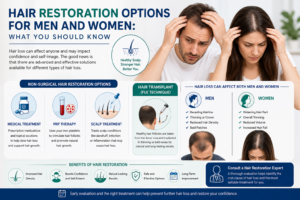
Hereditary hair loss is one of the most common causes of gradual thinning in both men and women. Men may notice a receding hairline or thinning at the crown, while women may experience reduced density around the central parting.
Hormonal Changes
Changes in hormone levels can affect the hair growth cycle. Pregnancy, childbirth, menopause, thyroid disorders, and certain hormonal conditions may contribute to increased shedding.
Stress and Lifestyle Factors
Physical or emotional stress, rapid weight loss, poor sleep, and restrictive diets may temporarily affect the normal hair growth cycle.
Nutritional Deficiencies
Low levels of certain nutrients, including iron, vitamin D, vitamin B12, zinc, or inadequate protein intake, may contribute to hair shedding in some individuals.
Scalp Conditions
Dandruff, inflammation, fungal infections, and other scalp conditions can affect the health of hair follicles and contribute to hair fall.
Identifying the cause is an important first step before selecting a Hair Treatment in Nashik.
Non-Surgical Hair Restoration Options
Not everyone with hair loss requires surgery. Depending on the cause and stage of hair loss, non-surgical treatments may be considered.
Medical Hair Loss Treatment
Certain types of hair loss may respond to prescription medicines or topical treatments. These treatments are selected according to the patient’s condition and should be used under professional guidance.
PRP Therapy
Platelet-rich plasma, commonly known as PRP, is a treatment that uses components obtained from the patient’s own blood. It may be considered for selected cases of hair thinning to support the health of existing hair follicles.
The number of sessions and expected response can vary depending on the individual.
Scalp Treatment
If a scalp condition is contributing to hair loss, treating the scalp problem may be an important part of the overall treatment plan. Managing dandruff, inflammation, or other scalp concerns can help create healthier conditions for existing hair.
Hair Transplantation
For individuals with permanent hair loss and suitable donor hair, a hair transplant may be considered.
Hair transplantation involves moving healthy hair follicles from a donor area, usually the back or sides of the scalp, to areas affected by thinning or hair loss.
FUE Hair Transplant
Follicular Unit Extraction, or FUE, involves extracting individual hair follicles from the donor area and placing them into the recipient area.
The technique can be used to restore areas such as:
- Receding hairlines
- Crown thinning
- Bald patches
- Reduced frontal density
The suitability of FUE depends on factors such as donor hair density, the pattern of hair loss, scalp health, and individual expectations.
Hair Restoration for Women
Hair restoration for women requires careful evaluation because female hair loss often has different causes and patterns than male-pattern hair loss.
Women may experience:
- Widening of the hair part
- Overall reduction in hair density
- Thinning around the crown
- Increased hair shedding
- Hair loss associated with hormonal or nutritional changes
Treatment may include medical management, nutritional correction, PRP therapy, scalp treatment, or hair transplantation in selected cases.
A detailed assessment is particularly important because treating an underlying medical or hormonal problem may be more appropriate than proceeding directly to a surgical procedure.
Hair Restoration for Men
Men commonly experience genetic hair loss that begins with a receding hairline, temple thinning, or crown hair loss. The progression can vary considerably from person to person.
Depending on the stage of hair loss, treatment may include medical management, PRP therapy, or hair transplantation.
A hair transplant may be considered when hair loss has become relatively stable and sufficient healthy donor hair is available.
Why a Personalized Treatment Plan Matters
Two people may have similar-looking hair loss but completely different underlying causes. For example, one person may have hereditary hair loss while another may be experiencing temporary shedding due to stress or nutritional deficiency.
This is why a personalized Hair Loss Treatment in Nashik plan begins with an appropriate evaluation.
A specialist may assess:
- Hair loss pattern
- Scalp health
- Hair density
- Donor hair availability
- Medical history
- Family history of hair loss
- Lifestyle and nutritional factors
- Previous treatments
Based on the findings, the most appropriate treatment options can be discussed.
When Should You Consult a Hair Specialist?
Early evaluation can be helpful when hair loss becomes persistent or progressively noticeable.
You should consider professional advice if you experience:
- Continuous hair shedding
- Noticeable hair thinning
- A widening hair part
- Receding hairline
- Crown thinning
- Sudden or patchy hair loss
- Persistent scalp irritation or scaling
- Hair loss after a major illness or lifestyle change
A consultation with a qualified specialist can help determine whether the hair loss is temporary, progressive, or related to an underlying condition.
Maintaining Hair Health After Treatment
Hair restoration is not only about selecting a procedure. Maintaining scalp and hair health is also important.
Some helpful habits include eating a balanced diet with adequate protein, avoiding excessive heat and chemical treatments, protecting the scalp from unnecessary damage, managing stress, and following professional post-treatment instructions.
Patients undergoing hair restoration procedures should also attend recommended follow-up appointments so that progress can be monitored.
Conclusion
Hair restoration options have expanded significantly, giving men and women several ways to manage different types and stages of hair loss. From medical and scalp treatments to PRP therapy and hair transplantation, the appropriate approach depends on the underlying cause, hair loss pattern, scalp health, and individual goals.
If you are considering Hair Restoration in Nashik, a professional evaluation can help identify the reason for your hair loss and determine which treatment options may be suitable. Whether you need a non-surgical Hair Treatment in Nashik or are considering a hair transplant, personalized treatment planning is an important step toward achieving natural-looking and healthy hair.
For individuals experiencing persistent hair fall, seeking appropriate Hair Loss Treatment in Nashik at an early stage may help in managing the condition and protecting existing hair.
Frequently Asked Questions
Is hair restoration suitable for both men and women?
Yes. Hair restoration can be considered for both men and women, although the cause and pattern of hair loss may differ.
Does everyone with hair loss need a hair transplant?
No. Many people can be managed with non-surgical treatments depending on the underlying cause and stage of hair loss.
Can PRP be used for hair thinning?
PRP may be considered for selected cases of hair thinning. A professional evaluation is recommended to determine whether it is appropriate.
How do I know which hair restoration option is right for me?
The appropriate treatment depends on the cause and pattern of hair loss, scalp condition, donor hair availability, and individual goals. A consultation can help determine the most suitable approach.
Can early hair loss be treated without surgery?
In some cases, early hair loss may be managed with medical treatment, scalp care, lifestyle changes, or PRP therapy. The appropriate option depends on the underlying cause.