Elite - Be Born Again
Edit Template

Uncategorized

Uncategorized

Understanding Rhinoplasty: Benefits, Procedure & Recovery

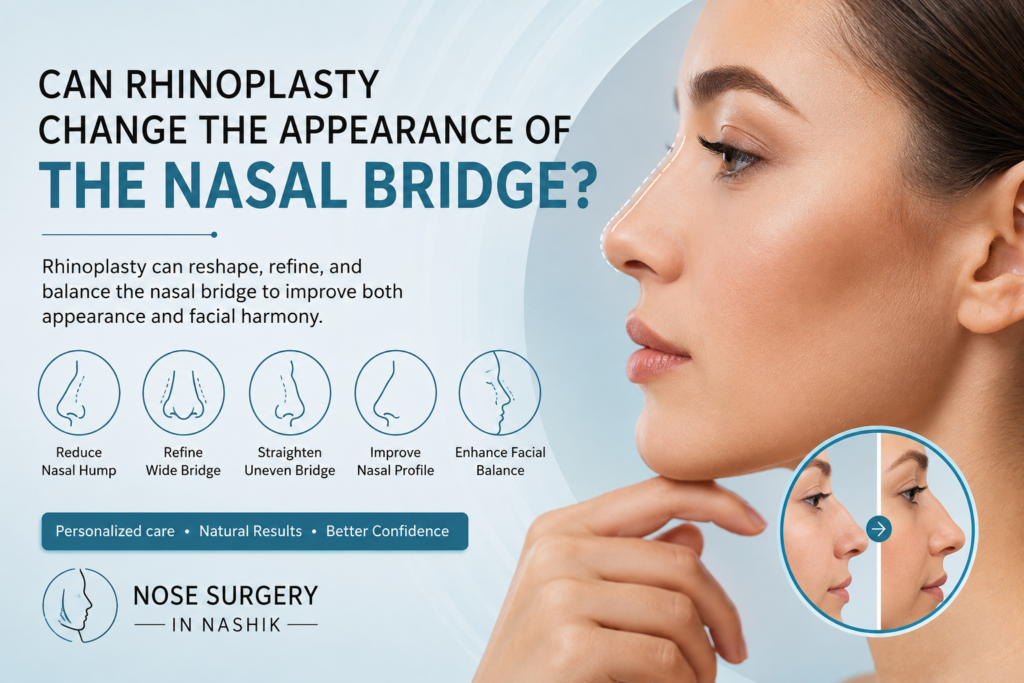
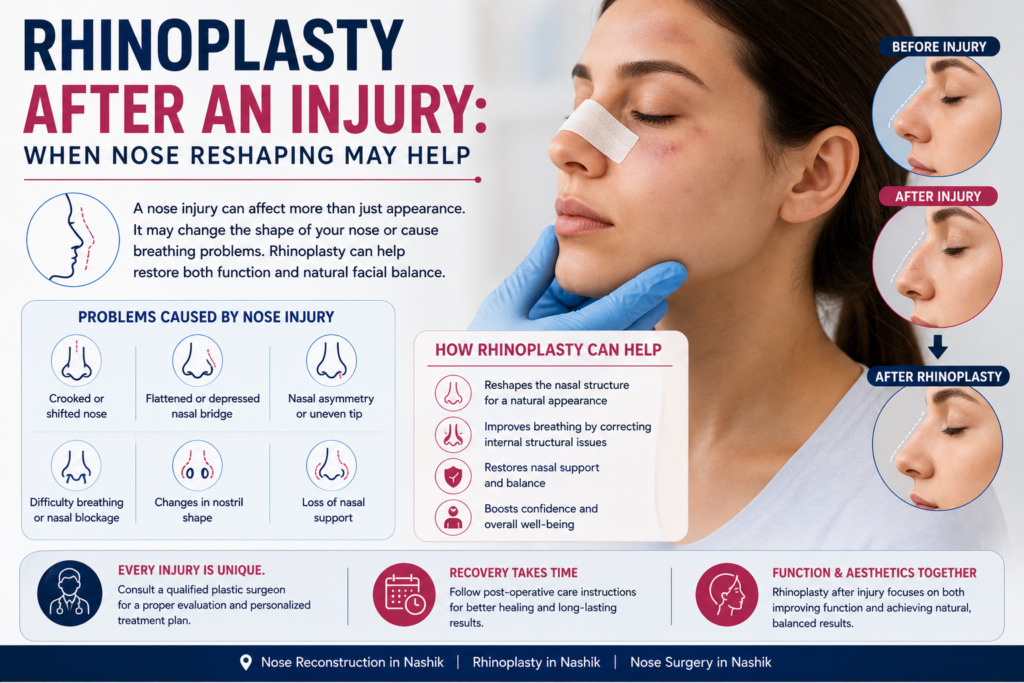
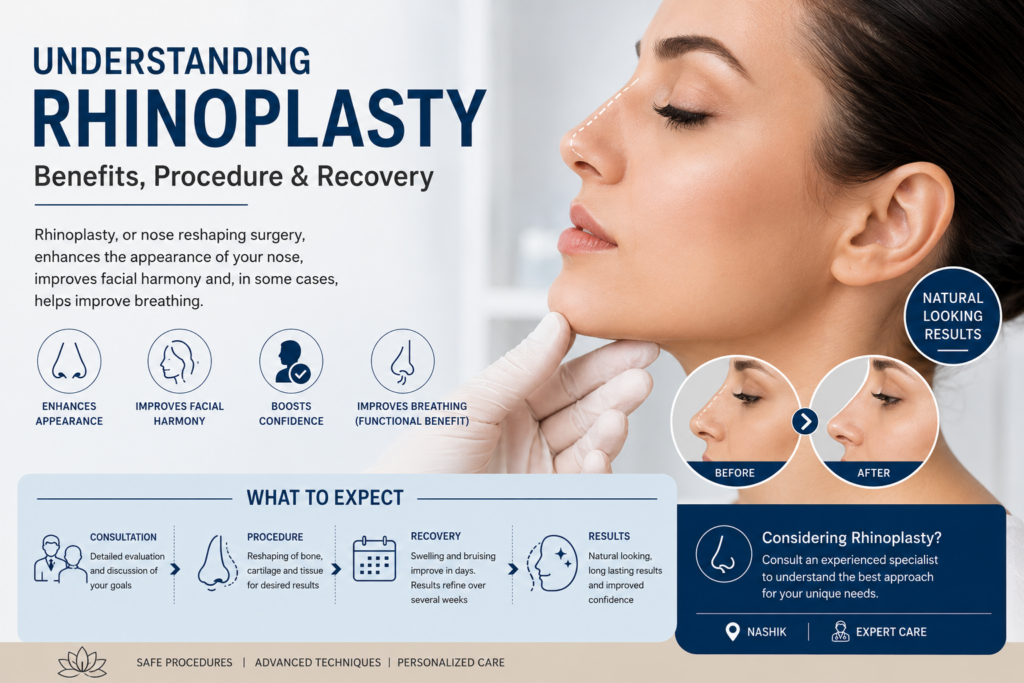
The nose plays a central role in facial appearance and also contributes significantly to breathing function. Some people are unhappy with the shape or size of their nose, while others experience breathing difficulties due to structural problems or previous injuries. Rhinoplasty is a surgical procedure that can improve the appearance of the nose, enhance facial harmony, and, in appropriate cases, help improve nasal function. Modern Rhinoplasty in Nashik combines advanced surgical techniques with personalized treatment planning to achieve natural-looking results that complement the patient’s facial features. Whether the goal is cosmetic enhancement or functional correction, the procedure is carefully tailored to each individual’s needs. This blog explains what rhinoplasty is, who may benefit from it, how the procedure is performed, and what patients can expect during recovery. What Is Rhinoplasty? Rhinoplasty, commonly known as a nose reshaping procedure, is a surgery performed to change the size, shape, or structure of the nose. It may be performed for cosmetic reasons, functional improvement, or a combination of both. Many people choose Cosmetic Nose Surgery to improve facial balance, while others undergo surgery to correct breathing problems caused by a deviated nasal septum, congenital conditions, or trauma. Each rhinoplasty procedure is customized according to the patient’s facial anatomy, skin thickness, and desired outcome. Why Do People Consider Rhinoplasty? There are several reasons why someone may consider Nose Surgery in Nashik. Common concerns include: A prominent nasal hump A wide or large nose Drooping nasal tip Bulbous nose tip Crooked nose Asymmetry Breathing difficulties Nasal injury or fracture Congenital nose deformities A consultation with an experienced plastic surgeon helps determine whether rhinoplasty is the most appropriate treatment. Benefits of Rhinoplasty Rhinoplasty offers both cosmetic and functional advantages depending on the patient’s needs. Some potential benefits include: Improves facial harmony and proportions Enhances the shape of the nose Refines the nasal tip Corrects a dorsal hump Improves nasal symmetry May improve breathing in selected patients Restores appearance after injury Provides long-lasting results The goal is always to achieve natural-looking improvements that complement the rest of the face rather than creating an artificial appearance. Who Is a Good Candidate? Rhinoplasty may be suitable for individuals who: Are unhappy with the appearance of their nose Have fully developed facial bones Experience breathing problems related to nasal structure Have realistic expectations about the results Are in good general health Do not smoke or are willing to stop smoking before surgery A detailed consultation helps determine whether surgery is appropriate based on individual goals and medical history. Types of Rhinoplasty Depending on the patient’s concerns, rhinoplasty may be performed for different purposes. Cosmetic Rhinoplasty This procedure focuses on improving the appearance of the nose by reshaping or resizing specific structures. Functional Rhinoplasty Performed to improve airflow and breathing by correcting structural abnormalities inside the nose. Revision Rhinoplasty Some patients require secondary surgery to improve the results of a previous rhinoplasty. How Is Rhinoplasty Performed? The exact surgical technique depends on the patient’s anatomy and treatment goals. The procedure generally involves: Consultation and Planning The surgeon evaluates facial proportions, nasal structure, skin thickness, and breathing function before developing a personalized treatment plan. Anesthesia Rhinoplasty is usually performed under general anesthesia or, in selected cases, local anesthesia with sedation. Surgical Approach The surgeon may use either an open or closed technique depending on the complexity of the procedure. Reshaping the Nose Bone, cartilage, and soft tissues are carefully modified to achieve the desired shape while preserving or improving nasal function whenever possible. Completion The incisions are closed, and a protective splint is placed over the nose to support healing. The surgery generally takes between one and three hours, depending on the complexity of the procedure. Recovery After Rhinoplasty Recovery varies from person to person, but most patients experience gradual improvement over several weeks. Common recovery stages include: First Week Mild swelling and bruising around the eyes Nasal splint remains in place Mild discomfort controlled with medication Two to Four Weeks Bruising begins to resolve Most daily activities can usually be resumed Swelling gradually decreases Long-Term Healing Although much of the swelling improves within a few weeks, subtle refinement continues over several months. Final results may take up to one year to become fully visible. Following post-operative instructions carefully is essential for optimal healing. Tips for a Smooth Recovery Patients are commonly advised to: Sleep with the head elevated Avoid heavy lifting and strenuous exercise Protect the nose from accidental injury Avoid wearing heavy glasses if advised Attend scheduled follow-up appointments Take medications exactly as prescribed These measures help support proper healing and reduce the risk of complications. Are Rhinoplasty Results Permanent? In most cases, the structural changes made during rhinoplasty are long-lasting. Once healing is complete, the results generally remain stable for many years. However, natural aging and facial changes may continue over time. Maintaining realistic expectations and following your surgeon’s recommendations contribute to long-term satisfaction. Choosing the Right Surgeon Rhinoplasty is one of the most technically demanding cosmetic procedures because it requires balancing aesthetics with nasal function. Selecting a qualified plastic and cosmetic surgeon with experience in facial procedures is essential. During your consultation, your surgeon will discuss your concerns, evaluate your facial anatomy, explain available treatment options, and create a personalized surgical plan based on your goals. Conclusion Rhinoplasty is a highly individualized procedure that can improve facial balance while also addressing functional concerns in appropriate cases. Whether the goal is cosmetic refinement, correction after injury, or improved breathing, careful planning and expert surgical techniques play an important role in achieving natural-looking results. If you are considering Rhinoplasty in Nashik, consult an experienced plastic surgeon for a detailed evaluation. A personalized consultation helps determine whether Nose Surgery in Nashik or another treatment option is best suited to your needs. With the right approach, Cosmetic Nose Surgery can enhance facial harmony while maintaining a natural appearance. Frequently Asked Questions (FAQs)   Is rhinoplasty only a cosmetic procedure? No. Rhinoplasty may also be performed to improve breathing and correct structural

Uncategorized

Common Causes of Hair Loss in Men and Women

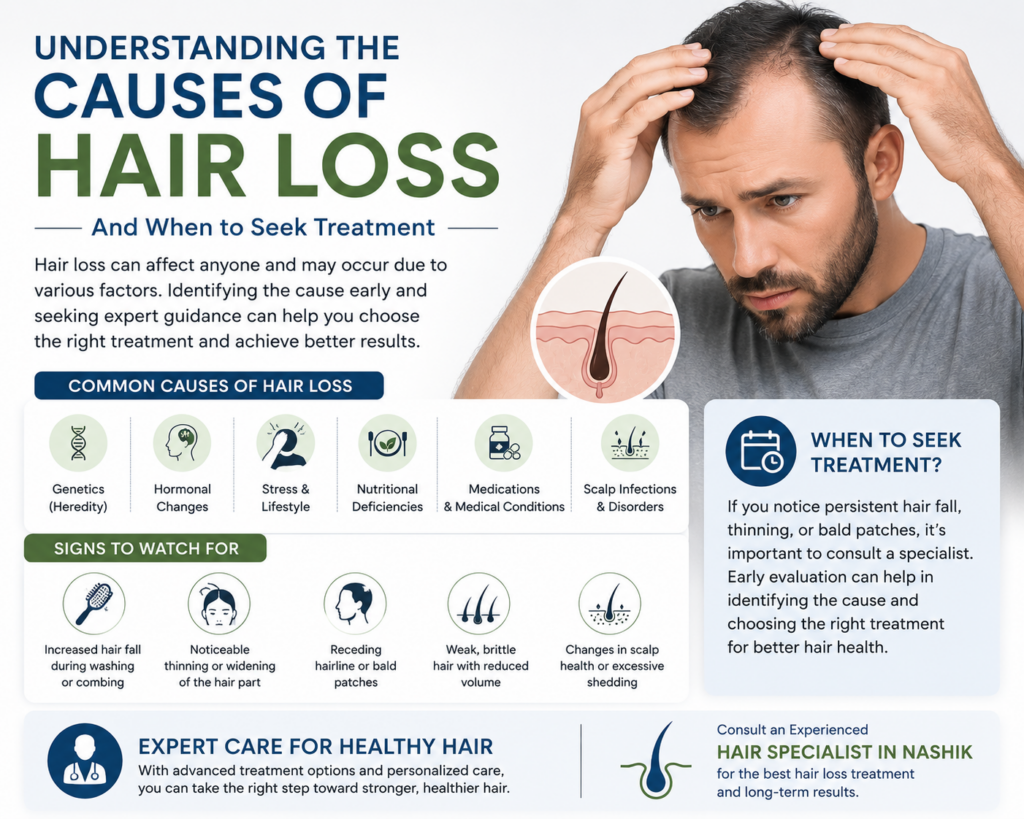
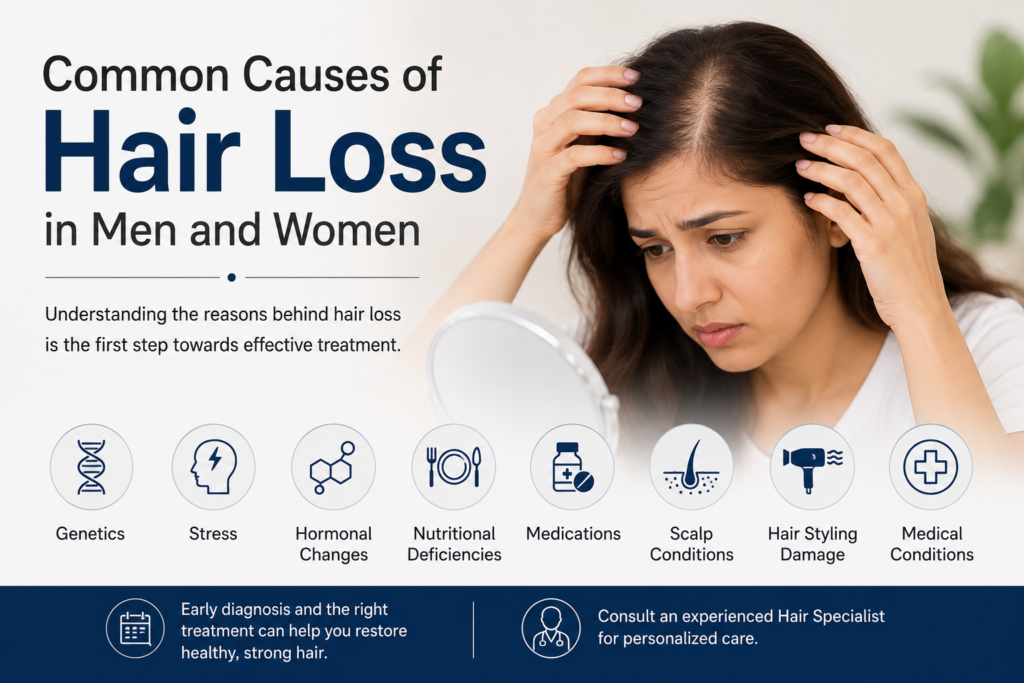
Hair loss is one of the most common concerns affecting both men and women. While losing a small amount of hair every day is normal, excessive hair fall, thinning hair, or bald patches may indicate an underlying condition that needs medical attention. Hair loss can occur due to several factors, including genetics, hormonal changes, stress, nutritional deficiencies, and certain medical conditions. The good news is that many forms of hair loss can be managed effectively when diagnosed early. Modern hair treatment in Nashik focuses on identifying the root cause and creating a personalised treatment plan that supports healthier hair growth. In this blog, we’ll discuss the most common causes of hair loss, when to seek professional help, and the treatment options available. Understanding the Hair Growth Cycle Hair naturally grows in three phases: Anagen (Growth Phase) This is the active growth stage and usually lasts between two and seven years. Catagen (Transition Phase) Hair growth slows, and the follicle prepares for the resting phase. Telogen (Resting Phase) Older hair sheds naturally to make room for new hair growth. When this cycle is disturbed, noticeable hair thinning or excessive hair fall may occur. Common Causes of Hair Loss 1. Genetic Hair Loss Hereditary hair loss is the most common cause. In men, it often appears as a receding hairline and thinning at the crown. Women generally experience diffuse thinning over the top of the scalp while maintaining the frontal hairline. 2. Hormonal Changes Hormonal imbalance can significantly affect hair growth. Common causes include: Pregnancy Childbirth Menopause Thyroid disorders PCOS Treating the underlying hormonal condition often improves hair health. 3. Stress Physical illness, surgery, emotional stress, or sudden weight loss may trigger temporary hair shedding known as Telogen Effluvium. Hair usually begins improving once the body recovers. 4. Nutritional Deficiencies Hair requires adequate nutrition for healthy growth. Low levels of: Iron Vitamin D Vitamin B12 Zinc Protein may contribute to excessive hair fall. 5. Medical Conditions Hair loss may also be associated with: Thyroid disease Autoimmune disorders Diabetes Chronic illnesses Scalp infections 6. Medications Certain medicines may cause temporary hair loss, including treatments for: Blood pressure Depression Arthritis Cancer Always consult your doctor before making changes to prescribed medication. 7. Scalp Problems Healthy hair begins with a healthy scalp. Conditions like dandruff, psoriasis, fungal infections, and seborrheic dermatitis can weaken hair follicles if left untreated. 8. Hair Styling Damage Frequent chemical treatments, excessive heat styling, and tight hairstyles may damage hair over time. Reducing excessive styling can help protect hair health. When Should You Visit a Hair Specialist? Consult a Hair Specialist in Nashik if you notice: Hair fall lasting more than three months Sudden hair loss Bald patches Receding hairline Continuous hair thinning Persistent scalp problems Early diagnosis often leads to better treatment outcomes. Hair Loss Diagnosis A detailed consultation may include: Medical history Scalp examination Hair density assessment Blood investigations (when necessary) Lifestyle evaluation Understanding the exact cause helps create a personalized treatment plan. Treatment Options Depending on your condition, treatment may include: PRP Therapy Medical Treatment Hair Transplant Nutritional Support Scalp Care Lifestyle Modifications Every patient receives a treatment plan based on their individual needs. Tips for Maintaining Healthy Hair Eat a balanced diet. Avoid excessive heat styling. Manage stress effectively. Treat scalp conditions early. Follow your doctor’s advice. Schedule regular follow-ups when needed. Conclusion Hair loss is not always permanent, and early diagnosis can make a significant difference. Whether the cause is genetic, hormonal, nutritional, or medical, modern treatment options can help manage hair loss and support healthier hair growth. If you are experiencing persistent hair fall or thinning, consult an experienced Hair Specialist in Nashik for a comprehensive evaluation. Personalized Hair Treatment in Nashik can help identify the underlying cause and guide you toward the most appropriate solution. Frequently Asked Questions (FAQs) Is hair loss normal? Yes. Losing around 50–100 hairs per day is considered normal. Can stress cause hair loss? Yes. Physical and emotional stress can temporarily increase hair shedding. Who is a good candidate for PRP treatment? Individuals with early hair thinning and active hair follicles may benefit from PRP therapy after medical evaluation. When should I consult a hair specialist? If you notice persistent hair fall, thinning, or bald patches, it is advisable to seek professional evaluation. Can hair loss be treated without surgery? Yes. Many individuals respond well to non-surgical treatments such as medications, PRP therapy, and lifestyle modifications.        

Uncategorized

Hair Transplant vs PRP Therapy: Which Hair Loss Treatment is Right for You?

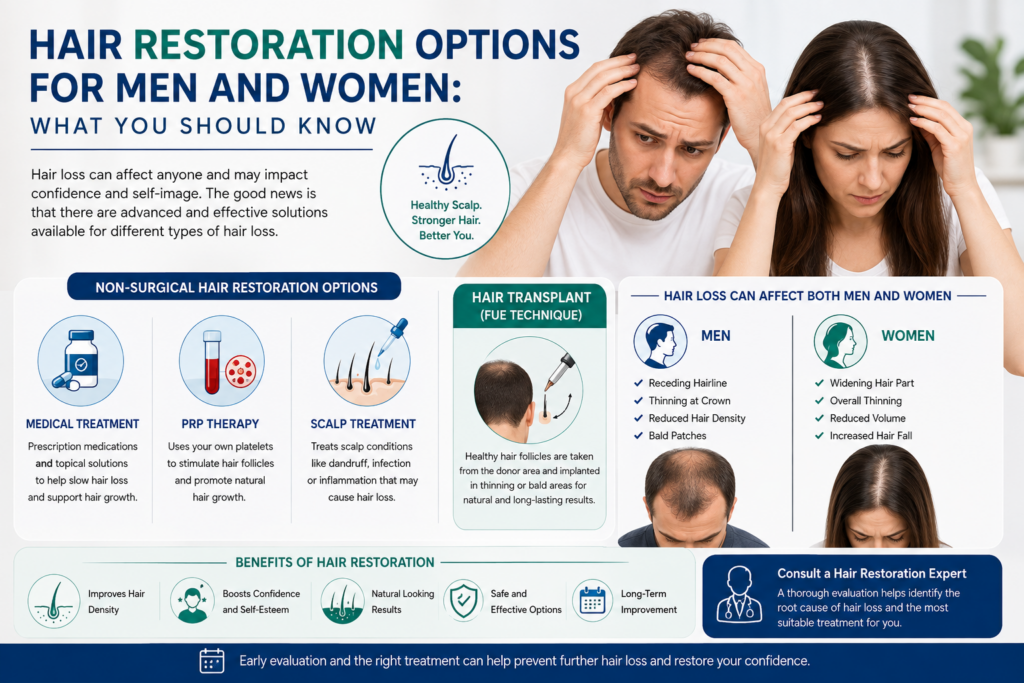
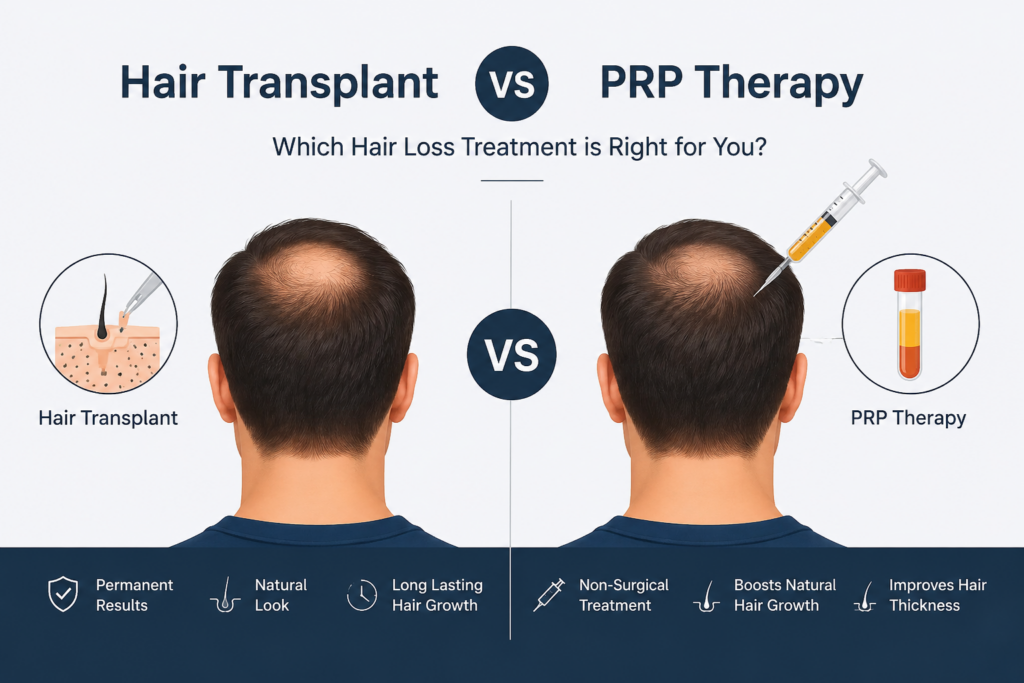
  Hair loss is one of the most common concerns affecting both men and women today. Whether it begins with a receding hairline, thinning hair, or visible bald patches, losing hair can affect not only your appearance but also your confidence. The reasons behind hair loss vary from person to person and may include genetics, hormonal changes, stress, poor nutrition, certain medical conditions, or the natural ageing process. Fortunately, modern medical advancements have made hair restoration more effective than ever. Two of the most popular treatment options are hair transplantation and platelet-rich plasma (PRP) therapy. If you are searching for a hair transplant in Nashik, you have likely come across PRP treatment in Nashik as well. While both treatments aim to improve hair growth, they work differently and are suitable for different stages of hair loss. This guide will help you understand both procedures so you can make an informed decision about the treatment that best suits your needs. Understanding Hair Loss Hair loss usually develops gradually. Many people first notice excessive hair fall while combing, washing their hair, or finding more hair on their pillow. Others experience a receding hairline, thinning at the crown, or a widening hair part. Although it is normal to lose some hair every day, continuous or excessive hair loss should not be ignored. Several factors can contribute to hair loss, including hereditary conditions, hormonal imbalances, stress, nutritional deficiencies, thyroid disorders, scalp infections, certain medications, and unhealthy lifestyle habits. Identifying the cause of hair loss is the first step toward choosing the most appropriate treatment. Seeking professional advice at an early stage often helps preserve existing hair and improve treatment outcomes. What is a hair transplant? A hair transplant is an advanced surgical procedure that restores hair by relocating healthy hair follicles from an area with dense hair growth, usually the back or sides of the scalp, to areas affected by thinning or baldness. Modern hair transplant techniques are designed to provide natural-looking and long-lasting results. Since the transplanted follicles come from your own scalp, they continue to grow naturally after healing. The procedure is carefully planned according to your hairline, facial features, and hair density to achieve a balanced and realistic appearance. Hair transplantation is generally recommended for individuals who have permanent hair loss, visible bald patches, or significant hairline recession. It provides a long-term solution because the transplanted follicles are usually resistant to the pattern of hair loss that affected the original area. Many individuals looking for the best hair transplant in Nashik choose this procedure to restore hair density, improve facial appearance, and regain confidence. What is PRP therapy? PRP, or Platelet-Rich Plasma Therapy, is a minimally invasive treatment that uses your body’s own healing properties to improve scalp health and strengthen existing hair follicles. During the procedure, a small sample of your blood is collected and processed to separate platelet-rich plasma, which contains natural growth factors. This concentrated plasma is then injected into specific areas of the scalp to support healthier hair growth. Unlike a hair transplant, PRP therapy does not create new hair follicles or restore hair in completely bald areas. Instead, it works by strengthening weak follicles, reducing ongoing hair fall, and improving hair thickness in individuals who still have active hair follicles. Because it is a non-surgical treatment with minimal downtime, PRP therapy is commonly recommended for patients experiencing early or moderate stages of hair thinning. Hair Transplant or PRP Therapy – Which One Should You Choose? Choosing between a hair transplant and PRP therapy depends entirely on the condition of your hair and scalp. If you have permanent bald patches or a significantly receding hairline where hair follicles are no longer active, a hair transplant is usually the more suitable option because it physically restores hair to those areas. On the other hand, if you are experiencing increased hair fall or mild to moderate thinning but still have active hair follicles, PRP therapy may help strengthen existing hair and improve overall density. There is no single treatment that is ideal for everyone. The right approach depends on factors such as your age, hair loss pattern, scalp condition, donor hair availability, and treatment goals. A detailed consultation with an experienced specialist helps determine which option is best suited to your individual needs. Can Hair Transplant and PRP Therapy Be Combined? Yes. In many cases, hair transplant and PRP therapy complement each other very well. PRP therapy may be recommended before or after a hair transplant to support scalp health and improve the condition of existing hair. It may also help strengthen transplanted follicles during the healing process. Combining both treatments can provide more comprehensive hair restoration for suitable candidates. The exact treatment plan is always customised after a detailed evaluation of your scalp and hair condition. Maintaining Healthy Hair After Treatment Regardless of the treatment you choose, maintaining healthy hair requires proper care and healthy lifestyle habits. A balanced diet rich in protein, vitamins, and minerals supports healthy hair growth. Staying hydrated, managing stress, getting adequate sleep, and following a regular hair care routine also contribute to better scalp health. Avoiding excessive heat styling and harsh chemical treatments can further protect your hair. Following your doctor’s advice and attending follow-up appointments play an important role in achieving the best possible results after treatment. Why Choose Dr. Manoj Bachhav? Dr. Manoj Bachhav is an experienced plastic, cosmetic, hair transplant, and reconstructive surgeon in Nashik who provides personalised hair restoration solutions based on each patient’s individual needs. Every patient undergoes a detailed consultation that includes evaluation of the scalp, hair density, medical history, and expectations before a treatment plan is recommended. Whether you require advanced hair loss treatment in Nashik, PRP treatment in Nashik, or the best hair transplant in Nashik: every procedure is carefully planned using modern techniques and a patient-focused approach. The goal is to achieve natural-looking, long-lasting results while ensuring patient comfort, safety, and satisfaction throughout the treatment journey. Frequently Asked Questions Is a hair transplant

Uncategorized

PRP Treatment

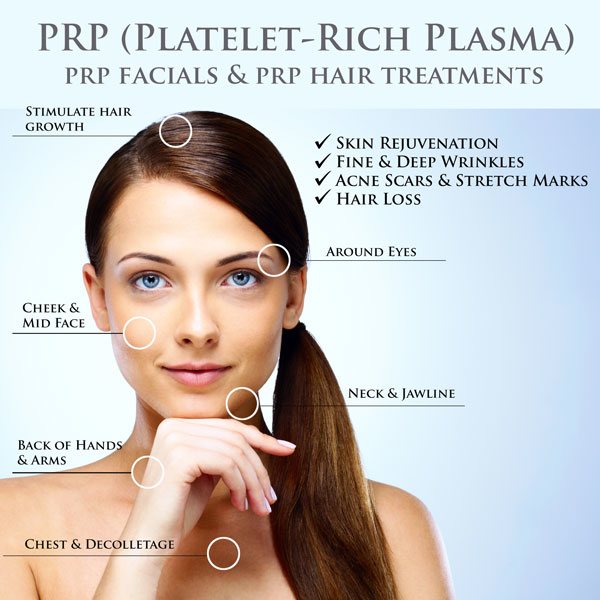
PRP treatment in Nashik offers an advanced solution for accelerating the healing process of various injuries and conditions by using the patient’s own blood platelets. This innovative therapy is particularly effective for treating tendon injuries, osteoarthritis, and hair loss, promoting natural tissue regeneration and pain relief. Nashik’s medical facilities are equipped with state-of-the-art technology and skilled professionals, ensuring safe and effective PRP treatments for residents and visitors alike. 1. What is PRP treatment? PRP treatment involves injecting a concentration of a patient’s own platelets to accelerate the healing of injured tendons, ligaments, muscles, and joints. It harnesses the body’s natural healing process to repair and rejuvenate damaged tissues. 2. How does PRP therapy work? PRP therapy works by drawing a small amount of blood from the patient, processing it to concentrate the platelets, and then injecting this platelet-rich plasma into the injured area. The growth factors in PRP enhance tissue repair and regeneration. 3. What conditions can PRP therapy treat? PRP therapy can treat a variety of conditions including tendon injuries, osteoarthritis, ligament sprains, muscle strains, and hair loss. It is also used in cosmetic procedures to improve skin texture and reduce wrinkles. 4. Is PRP treatment safe? PRP treatment is considered safe because it uses the patient’s own blood, minimizing the risk of allergic reactions and infections. However, as with any medical procedure, there can be some side effects like pain and swelling at the injection site. 5. How long does a PRP treatment session take? A typical PRP treatment session takes about one to two hours. This includes the time needed for blood draw, processing the blood to concentrate the platelets, and the actual injection into the affected area. Are you a suitable candidate for the procedure? PRP Treatment Good Overall Health: Candidates should be in good overall health without any serious medical conditions or infections Hair Loss Concerns: Ideal for individuals experiencing early stages of hair thinning or androgenic alopecia, rather than complete baldness. Skin Rejuvenation Needs: Suitable for those looking to improve skin texture, reduce fine lines, and enhance skin tone and elasticity. Joint Pain Relief: Beneficial for individuals with mild to moderate osteoarthritis or joint pain seeking a non-surgical treatment option. Realistic Expectations: Candidates should have realistic expectations about the outcomes and understand that multiple sessions may be required. Non-Smokers Preferred: Non-smokers or those willing to quit smoking are preferred, as smoking can negatively impact the healing process and effectiveness of the treatment.  

Uncategorized

मरणाच्या दारात पोचलेल्या २२ वर्षीय जयवंतला मिळाले नवीन जीवदान

[vc_row][vc_column][vc_column_text]   जयवंत जाधव (वय 22) या तरुणाचा 29 सप्टेंबर 2019 ला अपघात झाला व त्यात त्याच्या जननेंद्रियचा भाग, पोटाच्या खालचा भाग, मांड्या आदी भाग छिन्नविच्छिन्न झाला होता. अपघातानंतर जयवंतला तातडीने सटाणा येथील अद्ययावत सिम्स हॉस्पिटलमध्ये दाखल केले. तेथे शल्यविशारद डॉ. सचिन देवरे, डॉ. संदेश लेखन, डॉ. हरजितसिंग कथुरिया, डॉ. तुषार वाघ यांनी तातडीचे उपचार केले. अपघातात जयवंतचा कमरेखालचा बराचसा भाग छिन्नविच्छिन्न झाला होता. त्याचा जीवन-मरणाशी संघर्ष सुरू होता. उपचारादरम्यान त्यावर टप्प्याटप्प्याने सुमारे नऊ शस्त्रक्रिया करण्यात आल्या. प्राथमिक तपासणीत अतिरक्तस्त्राव, तुटलेले कमरेचा, ओटीपोटाचा व मांड्याचा भाग यातून त्याला तातडीने सुरवातीचे अत्यंत महत्त्वाचे उपचार देण्यात आले. रक्‍तदाब वाढावा म्हणून लाइफ सपोर्टिंग इंजेक्‍शन देऊन नाशिक येथील निम्स हॉस्पिटल येथे हलवण्यात आले. निम्स हॉस्पिटल, गंगापूर रोड येथे प्लास्टिक सर्जन डॉ. मनोज बच्छाव, जनरल व लेप्रोस्कोपिक सर्जन डॉ. सचिन देवरे यांनी जयवंत याच्या टप्प्याटप्प्याने सुमारे नऊ शस्त्रक्रिया केल्या. अवघड शस्त्रक्रिया करून जयवंतवर यशस्वी उपचार करण्यात आले. क्रिटिकल केअर स्पेशलिस्ट डॉ. महेश बनसोड यांनीही मेहनत घेतली. वेळीच उपचार मिळाल्याने तज्ज्ञ डॉक्‍टरांचे कसब व जयवंत यांची जगण्याची दुर्दम्य इच्छाशक्‍ती त्याला मरणाच्या दारातून पुन्हा सुखरूप घेऊन आली. विशेष म्हणजे एकवेळ प्राण वाचतील की नाही, अशी स्थिती असताना जयवंत स्वत: कुठल्याही आधाराविना चालू लागला.अडीच महिने झोपून असलेला जयवंत उपचारानंतर सुखरूप घरी गेला. उपचारानंतर जनरल व लेप्रोस्कोपिक सर्जन डॉ. सचिन देवरे यांनी सांगितले कि, जयवंतला पूर्ण बरे करण्यात निम्स हॉस्पिटलच्या आयसीयूच्या स्टाफने मेहनत घेतली. प्लास्टिक सर्जन डॉ. बच्छाव, डॉ. महेश बनसोड यांनी विशेष मेहनत घेतली. अशा रुग्णांना घरी पाठवताना खूप आनंद होतो. प्लास्टिक सर्जन डॉ. मनोज बच्छाव यांनी अशी प्रतिक्रिया व्यक्त केली कि, जयवंतच्या केसमध्ये सुमारे पाच प्लास्टिक सर्जरी कराव्या लागल्या आणि आज त्याला पूर्ववत करून घरी पाठवताना प्लास्टिक सर्जन म्हणून समाजात असल्याचा वेगळा आनंद वाटतो. जयवंत जाधव (रुग्ण) याने त्याचा अनुभव व्यक्त करताना सांगितले कि, अडीच महिने आयसीयूमध्ये अनेक अनुभव आले. मी निम्स हॉस्पिटलचा एक भाग होऊन गेलो होतो. खर्चिक प्रक्रिया असताना डॉ. सचिन देवरे, डॉ. मनोज बच्छाव यांनी हॉस्पिटलच्या बिलात विशेष सवलत देली. निम्स हॉस्पिटलचा व सर्व टीमचा मी ऋणी राहील. मनोज बच्छाव, नामांकित प्लास्टिक व कॉस्मेटिक सर्जन, नाशिक.[/vc_column_text][/vc_column][/vc_row]

Scroll to Top